
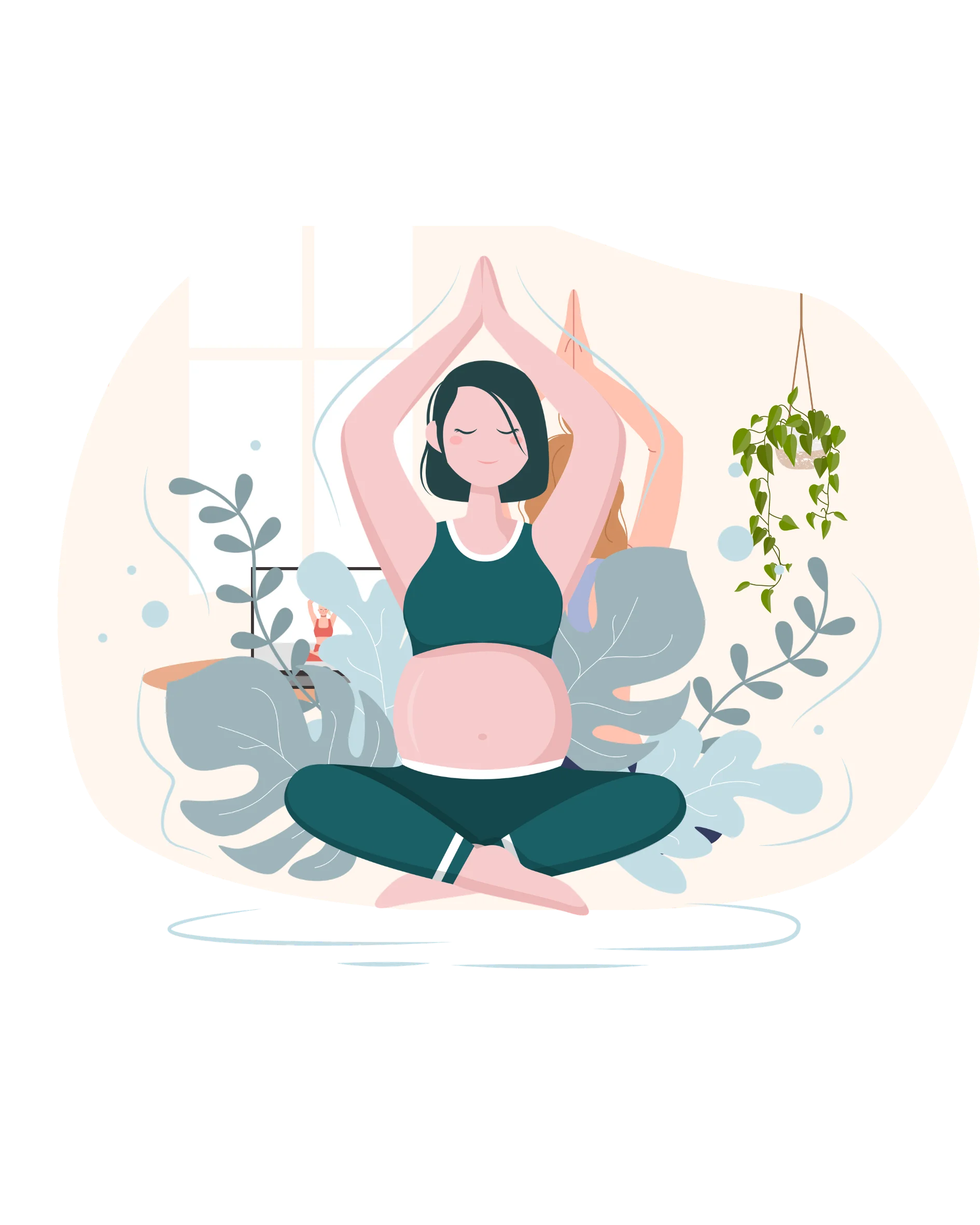
After having a baby, your body needs time, patience and care. Post pregnancy yoga is a gentle way to reconnect with your body, rebuild strength and find a few calm minutes for yourself — but only when the time is right. In this guide, we explain when new mothers can usually start, which poses are safe for the early weeks, and what to avoid.
When can you start post pregnancy yoga?
There is no single date that suits every mother. Many women are cleared for gentle exercise around their 6-week postnatal check after a normal delivery, while recovery after a C-section often takes longer. Always get your doctor’s clearance before you begin, especially if you had stitches, a C-section, heavy bleeding or any complications.
In the first days, simple deep breathing and gentle pelvic floor awareness — if your doctor approves — can be a calm starting point. Build up slowly from there.
Benefits of yoga after delivery
- Rebuild core and pelvic floor strength gradually and safely.
- Improve posture strained by feeding and carrying your baby.
- Ease stiffness in the neck, shoulders and lower back.
- Support healthy weight alongside good nutrition and rest.
- Reduce stress and fatigue with slow breathing and relaxation.
6 gentle poses for new mothers
1. Deep belly breathing
Lie on your back with knees bent. Place your hands on your lower ribs. Inhale slowly through the nose so the ribs expand sideways, then exhale fully. Practise for 3–5 minutes. This reconnects you with your deep core muscles.
2. Cat–Cow (Marjaryasana–Bitilasana)
On hands and knees, inhale as you gently drop your belly and lift your gaze, then exhale as you round your back. Move slowly for 8–10 rounds to release the spine.
3. Child’s Pose (Balasana)
Kneel with knees wide and fold forward, resting your forehead on a cushion. Stay for 1–2 minutes and breathe into your back. A lovely pose for tired shoulders.
4. Bridge Pose (Setu Bandhasana)
Lie on your back with knees bent. Exhale, gently engage your pelvic floor and lift your hips. Hold for 3–5 breaths and lower slowly. Repeat 5 times to strengthen the glutes and lower back.
5. Seated shoulder and chest opener
Sit tall, interlace your hands behind your back (or hold a towel) and gently open your chest for 5 breaths. This helps counter the forward posture of feeding and carrying.
6. Legs Up the Wall (Viparita Karani)
Lie down with your legs resting up against a wall for 3–5 minutes. It is deeply restful and helps you relax when sleep is short.
What to avoid in the early months
- Crunches, sit-ups and intense core work until your doctor or physiotherapist says it is safe.
- Deep backbends and deep twists in the early weeks, especially after a C-section.
- Jumping and high-impact movement until your pelvic floor feels strong.
- Holding your breath or pushing through pain or heaviness in the pelvis.
If you notice a bulge or doming along the middle of your stomach when you sit up, you may have abdominal separation (diastasis recti). Mention it to your doctor and avoid strong core exercises until you have guidance.
A simple 15-minute routine to start
- Deep belly breathing (3 minutes)
- Cat–Cow – 10 rounds (2 minutes)
- Bridge Pose – 5 rounds (3 minutes)
- Seated chest opener (2 minutes)
- Child’s Pose (2 minutes)
- Legs Up the Wall (3 minutes)
Practise safely with a teacher
Every recovery is different. Our Post Pregnancy Yoga Program offers gentle, women-only live classes online, so you can practise from home while your baby naps. Message us on WhatsApp to ask anything before you begin.
Note: This article is general wellness information, not medical advice. Please start yoga only after your doctor’s clearance, especially after a C-section or complications.


